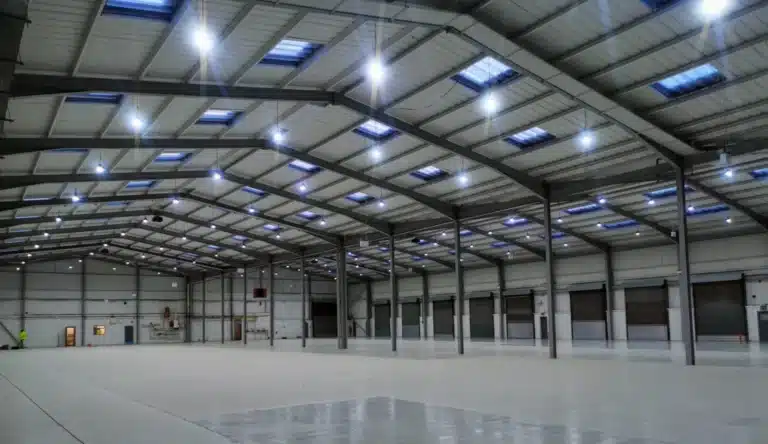
We understand how crucial fire protection is in industrial environments. From manufacturing plants to warehouses and processing facilities, the risk of fire can never be taken lightly. While active systems like sprinklers and alarms are essential, passive fire protection, including the use of fire-resistant paint, is equally vital in preserving structural integrity and giving occupants more time to evacuate safely.
In this guide, we’ll walk through the purpose and performance of fireproof coatings, particularly intumescent paint, and how it supports regulatory compliance, worker safety, and long-term building durability in industrial settings.
Understanding Fire-Resistant Paint
Fire resistant paint refers to specialist resistant coatings designed to protect building materials when exposed to fire. These coatings do not merely withstand heat, they actively delay the spread of flames and help maintain the structure’s load-bearing capacity during a fire.
There are two main categories of fire-related paints: fire retardant coatings and intumescent coatings. While both serve important roles in limiting the spread of fire, only intumescent paint provides a thermal barrier by expanding in volume and reducing in density when subjected to extreme heat.
This type of passive fire protection allows more time for evacuation and firefighting response, making it especially valuable in large-scale industrial buildings where structural steel, timber frames, or composite walls need to be preserved for as long as possible under intense fire conditions.
Why Industrial Buildings Require Fire-Resistant Coatings
Industrial facilities are inherently more vulnerable to certain types of fire due to the presence of machinery, flammable substances, and large open spaces. The consequences of delayed fire control can include complete structural failure, hazardous material release, and severe downtime or loss of business.
Applying fire-resistant paint to surfaces such as walls and ceilings, steel beams, timber structures and cable trays helps mitigate these risks by:
- Preventing or slowing structural collapse
- Limiting the spread of flame across key materials
- Containing heat within affected zones
- Meeting building regulation requirements for fire rating
In many cases, fire resistant paints are not only specified for safety but also for insurance purposes and legal compliance with British Standard BS 476 or European Standard EN 13501-1.
How Intumescent Paint Works
The most common resistant paint used in industrial environments is the intumescent coating. When exposed to fire, it undergoes a chemical reaction, expanding to form a thick, carbon-rich foam-like layer called char. This char acts as an insulating barrier, shielding the substrate beneath from heat.
Depending on the thickness of the applied film and the product used, intumescent paint can provide between 30 and 120 minutes fire protection. This duration is critical, as it buys time for emergency response and limits damage to structural components that could otherwise compromise the entire building.
Unlike cementitious coatings, which are thicker and more visible, intumescent coatings offer a smooth architectural finish and can be applied to complex geometries without adding significant weight to the structure.
Fire-Retardant Coatings vs Fire Resistant Coatings
It’s important to distinguish between fire-retardant coatings and fire-resistant coatings. Fire retardant paints are designed to limit the spread of fire, slowing its movement across a surface. They are commonly used on timber or decorative finishes but do not insulate against heat or preserve structural strength.
Fire-resistant paints, by contrast, are often intumescent in nature and are specifically formulated to delay the failure of steel, timber, or plasterboard during fire exposure. They are the go-to solution for industrial buildings where maintaining structural performance is paramount.
That said, some projects may require a combination of both, for instance, applying a fire retardant coating to decorative wooden surfaces while using an intumescent coating on structural beams.
Key Standards and Fire Ratings
In the UK, all fireproof coatings must be tested and certified to meet national or European standards. The most commonly referenced are:
- BS 476-20/21/22: Measures load-bearing capacity and integrity of building elements under fire conditions.
- BS 476-6/7: Assesses surface spread of flame and fire propagation for finishes on walls and ceilings.
- EN 13501-1: Classifies reaction to fire based on flame spread, smoke production, and burning droplets.
- ASTM E-119: Used internationally to assess structural fire resistance over time.
Most industrial coatings are rated in minutes of fire resistance, typically 30, 60, 90, or 120 minutes, depending on application thickness and substrate.
Substrate-Specific Considerations
Steel Structures
Structural steel loses its strength rapidly when exposed to temperatures above 500°C. Applying intumescent coatings to steel beams and columns can maintain load-bearing capacity for extended periods. These paints are usually applied in controlled factory conditions or on-site using spray equipment, though brush and roller application is also possible in some scenarios.
To ensure long-term performance, a compatible anti-corrosive primer must be used before applying the intumescent paint, followed by a top coat to protect against weathering and moisture.
Timber Frames
Timber is combustible but can still be protected with the right systems. High-performance intumescent paints for timber frames and cladding expand on heat exposure, delaying ignition and slowing the spread of flame. In some cases, a clear top coat is applied to protect the intumescent layer from UV degradation or humidity.
It’s particularly important to use solvent-based top coats for external timber to ensure durability in challenging environments.
Walls and Ceilings
Where industrial buildings include composite or plasterboard walls and ceilings, specially formulated fire-resistant paints can help meet Class 0 or Euroclass B flame-spread classifications. These coatings are often used to upgrade older surfaces to meet modern safety codes without replacing entire wall systems.
Some water based options are available for indoor use, offering low odour and compliance with volatile organic compound (VOC) limits, a useful feature for areas like food processing plants or laboratories.
Application and Performance
The correct application of fireproof coatings is as important as the product selection. Most intumescent paints require precise film thickness (measured as Dry Film Thickness or DFT) to deliver the stated fire resistance.
Surface preparation is critical. Steel must be cleaned and primed. Timber should be dry, sanded and sealed if necessary. Application is typically done using:
- Airless spray equipment for large areas
- Rollers or brushes for detailing and edge work
The inclusion of a top coat, often a decorative or protective finish, ensures the integrity of the system in humid or external conditions. Without a top coat, some intumescent coatings may degrade over time or lose adhesion.
Environmental conditions during application also matter. Most paints should not be applied below 5°C or in excessively humid settings, and drying times must be followed strictly.
Maintenance and Lifespan
Fire-resistant systems do not last indefinitely. Their performance may decline if the surface is damaged, repainted with incompatible materials, or exposed to harsh chemicals. That’s why routine inspection and maintenance are part of any robust fire protection plan.
When recoating is necessary, it’s essential to follow manufacturer recommendations to ensure the fire resistance of the system is preserved. In many cases, fire certifications may be voided if unauthorised overcoating occurs.
Frequently Asked Questions
How long does fire-resistant paint protect a building?
Depending on the system, it typically offers 30 to 120 minutes of fire protection, provided application is done correctly and maintained.
Can you paint over fire-resistant coatings?
Yes, but only with a compatible top coat. Adding too many layers or using the wrong finish may reduce effectiveness.
Is fire-resistant paint waterproof?
Most intumescent coatings are not waterproof on their own and require a top coat for external use.
Does it affect appearance?
Water-based options offer smooth finishes ideal for visible surfaces. Solvent-based products may be thicker but are more durable outdoors.
Can I apply it myself?
While some systems are suitable for trained decorators, complex or high-spec applications, especially on steel, should be handled by professionals familiar with fireproof coatings and standards.
Conclusion
Fire-resistant paint is more than just a precaution, it’s a critical part of the structural safety strategy in any industrial building. At Fine Lines Decorating, we specialise in applying fireproof coatings that meet rigorous standards and protect your building assets, staff, and operations.
Whether you’re safeguarding timber frames, steel columns, or walls and ceilings, our team ensures correct specification, preparation and application from start to finish.
If you’re planning a new project or need to upgrade existing fire protection, speak to us today to find out how we can help enhance your building’s fire resistance with high-quality, compliant coatings.